- Trade Treasury Payments | The Liquidity Brief
- Posts
- TTP Liquidity Brief | Issue 45
TTP Liquidity Brief | Issue 45
A new release, a new studio, and fresh coverage from the Gulf to global payments.

Carter Hoffman
March 16, 2026 • Estimated Reading Time: 10 minutes
🌟 Editor's note
Editor’s Note | Week of 10 March 2026
By Carter Hoffman
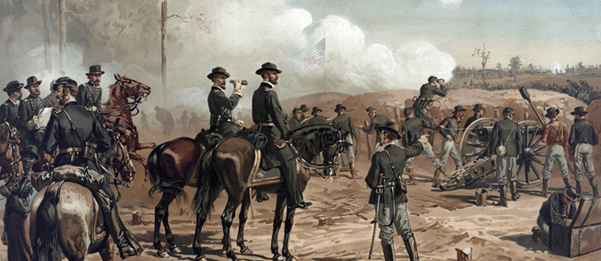
History is a great teacher, if we let it be! This week at TTP we released a new publication exploring the history of war finance, which is intended to help frame the current conversations of defence finance within the historical context. Interestingly, many of the financial tools we rely on today were first developed in times of conflict.
That’s not the only reason why it was an exciting week for TTP, as we also officially launched TTP Studios, our new podcast and video studio in central London. Part of our mission has always been to give a voice to our industry, and TTP studios now gives us a dedicated space to record more interviews, discussions, and conversations with people working across trade, treasury, and payments. You’ll start to see more of that content appearing over the coming weeks.
Across the rest of the week, we’ve been covering developments linked to the ongoing Iran conflict and its impact on Gulf shipping and global trade routes. We also published insights from ICISA Credit & Surety Week, where industry leaders discussed the outlook for retail and wholesale markets and the broader role of credit insurance in today’s uncertain environment. It was also an exciting week as we hosted our workshop on Managing Receivables Finance Programs held in partnership with the EBRD TFP.
Alongside that, there have been updates across payments infrastructure, treasury systems, and trade finance, including new partnerships, technology deployments, and initiatives aimed at supporting financing and risk management across global markets.
As always, there’s plenty to read and watch.
Until next time — stay historic.
— The TTP Editorial Team
Skip to your favourite part
Weekly Highlights
 Workshop on Managing Receivables Finance Programme |  ICISA Credit & Surety Week 2026 – Keynote: The State of Retail and Wholesale |  Trade Treasury Payments launches TTP Studios to document liquidity and risk management in real-economy finance |
Slow Read

Over the past 16 days, the world has witnessed a sharp and deeply worrying escalation in the Middle East. The conflict surrounding Iran has expanded beyond isolated strikes into a broader confrontation unfolding in multiple countries, with mounting casualties, and a growing fear that a wider war may yet unfold.
For those living in the region, the consequences are immediate and deeply human, touching homes, communities, and livelihoods in ways that numbers and words on a page can never begin to capture. It is clear, even at this early stage, that the impacts of this conflict (and the others still being waged in Ukraine, Gaza, Sudan, and elsewhere) are likely to extend far beyond the immediate violence. Among those wider consequences are the immense economic burdens and disruptions that conflicts place on societies, both in sustaining the fighting itself and in dealing with the aftermath.
For as long as states have built militaries and fought wars, they have had to work out how to pay for them. As our new publication, released today, explores, many of the financial innovations and improvisations that have been put in place over the centuries because of wartime desperation have gone on to become staples of national and international financial systems, long outliving the conflicts out of which they were born.
This publication aims to step back into that longer history of Western war finance, travelling from tribute in antiquity, through the rise of national debt in early modern Europe, to the financial engineering of the world wars, and the weaponisation of finance in our own time.
But as we consider the economics of it all, let’s not lose sight of the fact that behind innocuous-sounding terms like ‘defence’ and ‘security’ are often pieces of equipment that have been specifically engineered as emissaries of death and destruction.
The unfortunate reality, then, is that this publication arrives at an all-too-fitting moment. Its subject may be historical, but its relevance is immediate. If the present debate about defence spending feels unusually urgent, that is because it is. But it is also as old as recorded history.
As with any study of history, the aim is not to discover a solution in the pages of the past, but rather to understand the context with which the current situation fits into the broader narrative, and use that refined understanding to ask better questions. The hope is that, with this history in mind, today’s conversations about rising defence spending will feel a little more like the latest chapter in an old war story that dates back to ancient times.
Iran Conflict Digest
 |  |
Trade digest


Treasury, payment and global banking digest


🗓️ Upcoming events
Credit & Surety Week 2026
| ICC Global Banking Commission March 2026 Meeting
|
Digital Trade for Regional Growth: Foundations, Finance & Adoption
| IFC Global Trade Partners Meeting
|
Women in Trade: Leader Development Workshop
| 2026 BAFT Global Annual Meeting
|
Commodity Trading Week Europe
| Money 2020
|
FCI 58th Annual Meeting
| ICC Austria's Trade Finance Week 2026
|
Multimedia from Trade Treasury Payments


🚀 Our latest edition

Did You Know?
Today’s financial systems still echo the old trade routes that once linked Asia, the Middle East and Europe, where merchants in Persian cities traded silk, spices and precious metals using trust based credit long before modern banking existed. Those early exchanges quietly laid the groundwork for the global networks that now move money and goods around the world.
At the same time, technology is rapidly reshaping finance and logistics across the Middle East, as banks strengthen payment links and businesses adopt artificial intelligence and digital systems to track goods, manage risk and make faster decisions. Trade may have ancient origins, but the tools that support it continue to change at remarkable speed.